
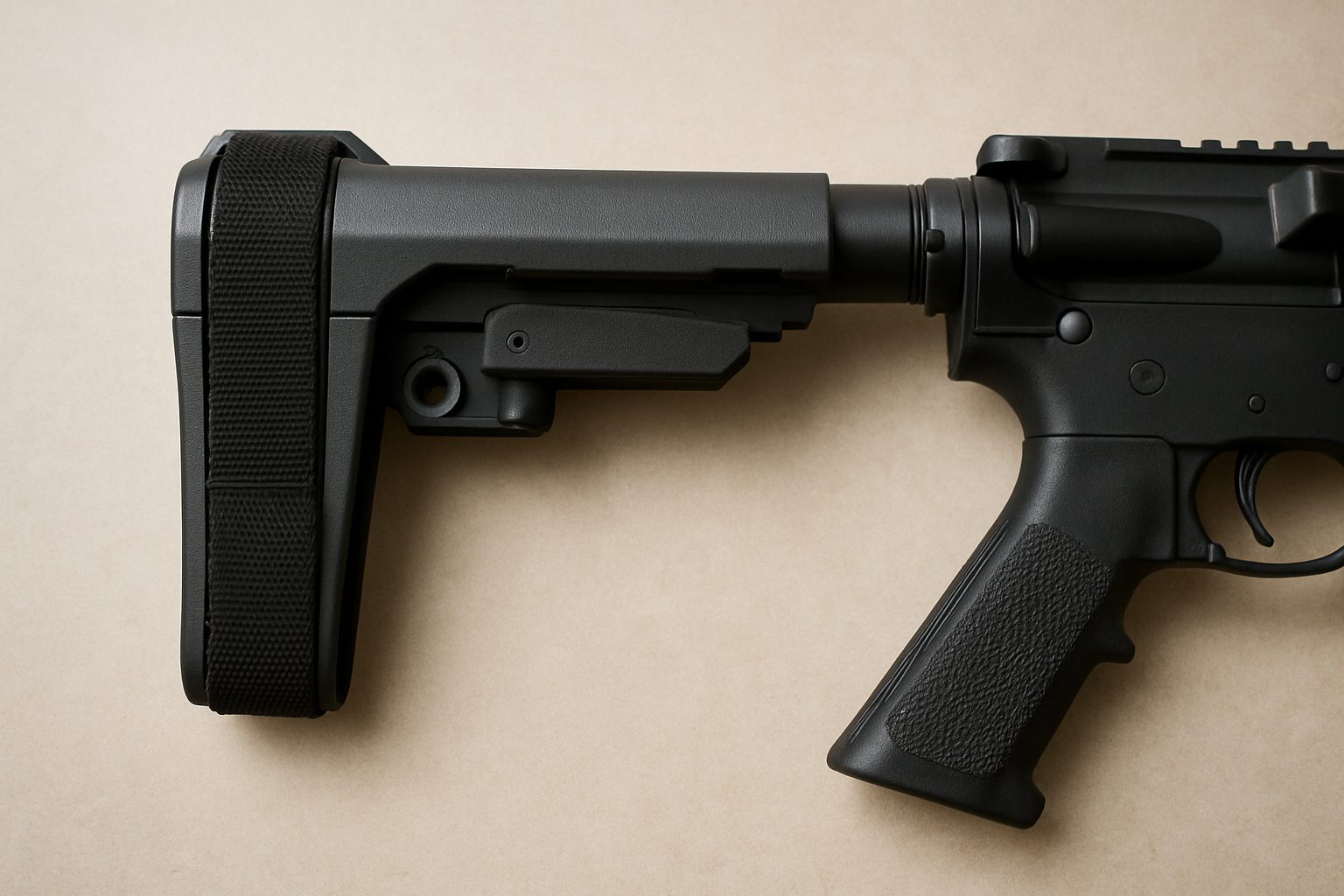
Purchasing a pistol brace is a decision that carries more weight than many first-time buyers anticipate. Before any accessory is attached to your firearm, understanding the regulatory environment is critical. The PSA Dagger brace has become a popular configuration choice, but popularity does not automatically mean simplicity when it comes to legal compliance. Informed buyers are better positioned to enjoy their firearm legally and confidently.
What Is the Legal Definition of a Pistol Brace?
A pistol stabilizing brace is an accessory originally developed to help shooters with disabilities operate a pistol using a single hand. Regulators initially classified these devices differently from traditional rifle stocks, allowing them to be used on pistols without triggering the National Firearms Act requirements that apply to short-barreled rifles.
Over time, however, the ATF has revisited this classification multiple times. The key factor in determining how a braced pistol is classified often comes down to overall configuration, intent of use, and whether the firearm is being operated in a manner consistent with its classification as a pistol. Staying current with the ATF’s official guidance is essential for any owner who wants to remain on the right side of federal law.
How Can You Verify That Your Configuration Is Compliant?
Verifying compliance starts with knowing exactly how your PSA Dagger is configured. The barrel length, overall length, and the specific brace model you attach all contribute to how the firearm may be classified under applicable law. Detailed records of your firearm’s specifications can be valuable if questions about classification arise.
Consulting with a licensed firearms dealer or a qualified firearms attorney before making modifications provides an additional layer of protection. These professionals stay current with regulatory changes and can provide guidance tailored to your specific configuration and jurisdiction. Self-research is a useful starting point, but professional consultation adds certainty that individual research alone cannot guarantee.
What Are the Consequences of Non-Compliance?
The consequences of owning an unregistered NFA item—whether intentional or accidental—are serious. Federal law treats these violations with significant gravity, and penalties can include both criminal charges and the permanent loss of firearm ownership rights. Courts have consistently upheld these penalties even in cases where owners claimed they were unaware of the classification change.
This is precisely why proactive compliance matters far more than reactive correction. If a regulatory change reclassifies your braced pistol as an NFA item, acting promptly—whether by registering the firearm, modifying it to bring it into compliance, or removing the brace—protects you from the more severe consequences that follow inaction.
How Does Safe Storage Apply to Braced Pistols?
Safe storage is a fundamental responsibility regardless of your firearm’s configuration. A braced pistol should be stored securely in a manner that prevents unauthorized access, particularly by minors. Approved storage solutions—such as a quality gun safe or a locking case—reduce the risk of theft, accidents, and unauthorized use.
Proper storage also means keeping your firearm in a condition that prevents unintended discharge. Storing the firearm unloaded and keeping ammunition in a separate location are widely recommended practices that align with both safety standards and legal requirements in many jurisdictions.
Building a Foundation of Informed Ownership
Every firearm owner benefits from treating compliance as an ongoing process rather than a one-time checkbox. Regulations change, court rulings shift legal interpretations, and new guidance can alter what was previously considered settled practice. Owners who build habits of regular research and professional consultation are far better equipped to navigate these changes without disruption.
Responsible ownership of a PSA Dagger with a brace means more than following the law as it stands today. It means committing to staying informed, handling the firearm safely, and contributing to a culture of accountability within the broader firearm-owning community.





Leave a Reply